Suddenly we have news from Oxford, an encounter with Victorian celebrity and a suspicion that Janie might have popped the question.
1880 is a fragmented year to put together in Fred and Jane’s story as Fred’s diary eventually sputters out and there are few letters from this year. In the world at large, Disraeli was Prime Minister until Gladstone defeated him in the April election. Electric light was continuing its advance in to public spaces but life expectancy was still only half that of what it is now.
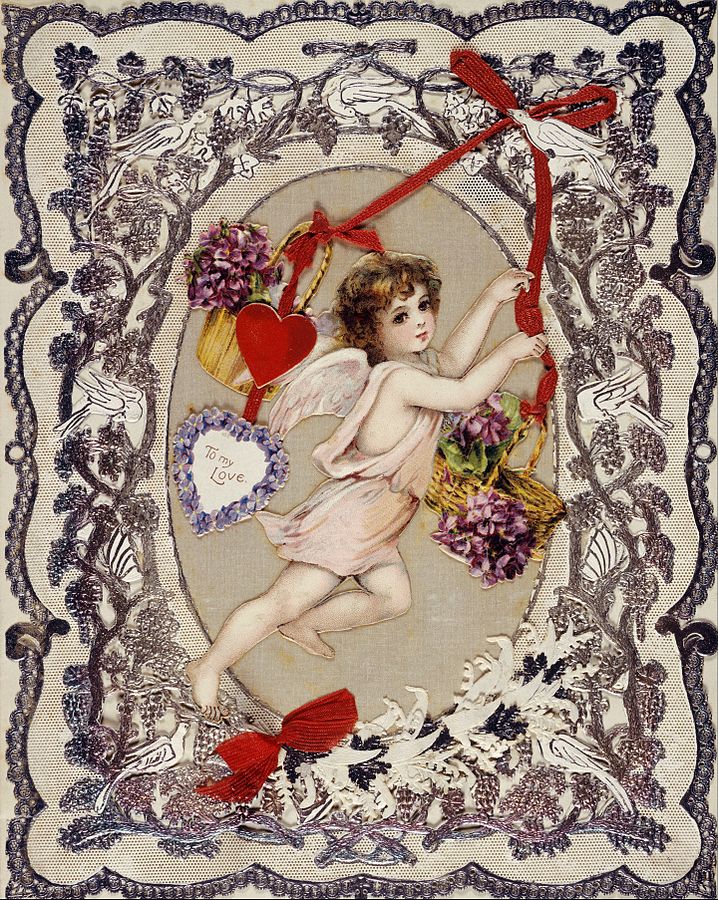
February 1880 Fred gave Jane the traditional gift of a pair of gloves on Valentine’s day and she gave to him a Valentine and a pen. Fascinatingly, on 29th of February, the discussion of marriage pops up:
“February 29. Sunday. Had a very serious talk with J about my affairs. Told her that at present I had only 28/- per week and that I expected I should be 25 years old before I could comfortably marry her. She said she would gladly wait for me.”
When I first noticed the date I suddenly wondered if Janie had popped the question. Or perhaps if not a full blown proposal, maybe the date emboldened her to go fishing for Fred’s intentions? Fred is 21 and Jane has just declared a willingness to wait for Fred for four years. Is this an engagement? Or is it what used to be known as ‘an understanding’? Whatever it this is, by this time Janie and Fred are obviously serious about each other. It is also a far better Valentine’s season than the one they had last year. I have to say though, I am loving Jane so much, even though I don’t have much of her writing for the first couple of years of their courtship. Her actions speak volumes and as much as the times allow, she is trying to be the architect of her own future. She sees something in Fred she belives is worth nurturing.
However with Fred wondering exactly how much he can expect for himself and his future with Janie, the very next day, he what had what must have been an encouraging encounter.
Fred paid close attention to technological and social advances – often going to lectures and public events. On the 1st of March 1880 he went to see Samuel Plimsoll ‘The Sailor’s Friend’ speak at the Cutler’s Hall in Sheffield. Plimsoll was the inventor and political advocate of the famous ’Plimsoll Line’ that prevented dangerous overloading of ships and boats and his activism must have potentially saved many hundreds of lives.
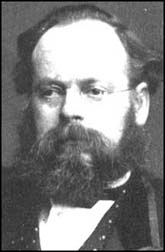
He was a local boy ‘made good’ and a shining example of a self-educated man – who had gone to morning and evening classes at the People’s College in Sheffield, before going on to be a clerk, an inventor, a millionaire, philanthropist, and eventually an MP. He was everything good about a modern Victorian gentleman celebrity.
(If you want to know more about Samuel Plimsoll, here is a transcript of a fascinating podcast about him: http://www.liverpoolmuseums.org.uk/podcasts/transcripts/plimsoll_sensation.aspx)
Looking back over what I know so far of Fred’s life I think he must have had real ambition. The events that were to set him on a loftier path (and eventually give him the means to marry Janie) were still more than a year away but I wonder how much Fred was inspired and encouraged by man like Samuel Plimsoll. He must have seen something himself in Plimsoll’s beginnings – taking advantage of adult education, the very education that Plimsoll himself had undertaken.
Annoyingly, I think for Fred, one of his friends had landed a scholarship to Culham College, in Abingdon, not far from Oxford, to train as a School Master. 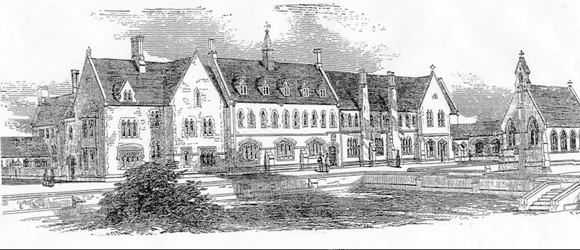 Fred Johnson was one of Fred’s adult education friends and at that time it seems they were fairly close. He was the younger brother of Fred and Janie’s mutual friend Annie Johnson (who had acted as a go-between in the ostentatious swapping of likenesses the previous September). Of the sparse numbers of letters I have for 1880, the lion’s share are actually Johnson’s letters to Fred during term time. I’m sure that to begin with Fred would have been delighted that Johnson’s hard work had paid off, but Johnson’s letters to Fred have an edge to them that I really don’t like. It’s almost as if he’s rubbing Fred’s nose in it a bit.
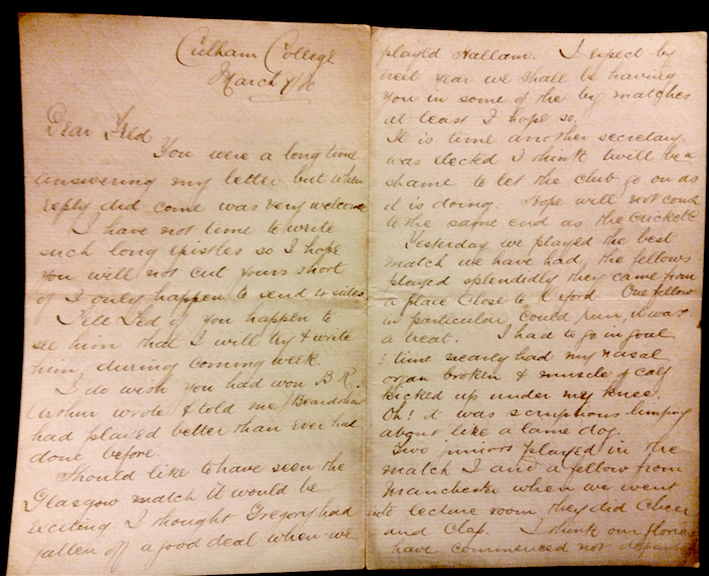
Here is the full transcript of Fred Johnson’s letter of 8th March 1880. His description and evident relish in the bullying of fellow students is difficult to read. Also his judgement of his peers back home is rather harsh and smacks a little of privilege. I don’t know how much more privilege a grocer’s son would have compared to most of the steel factory ‘fodder’ back in Attercliffe but I don’t think Johnson has been much acquainted with working to exhaustion. In all of our Fred’s letters, the only times he is critical and judgemental of others is if the person or people in question are unfair, impolite or unkind. I just can’t imagine Fred approving of Johnson’s attitudes. You read for yourself, and tell me what you think – I’d be fascinated to know if I am finding there to be some toxic edge to Johnson or if I am just letting the values of the times cloud my own judgement.
(Annotations are my attempt at working Johnson’s shortcuts into sense)
“Culham College
March 8/80
Dear Fred
You were a long time answering my letter when reply did come was very welcome. I have not time to write such long epistles so hope you will not cut yours short if I only happen to send 4 sides.
Tell Ted if you happen to see him that I will try and write him during the coming week.
I do wish you had won [the game]. Arthur wrote and told me J Beardshaw had played better than ever had done before. Should have liked to have seen the Glasgow match it would be exciting. I thought Gregory had fallen off a good deal when we played Hallam. I expect by next year we shall be having you in some of the matches at least I hope so.
It is time another secretary was elected I think it will be a shame to let the club go on as it is doing. Hope will not come to the same end as the Cricket C.
Yesterday we played the best match we have had, the fellows played splendidly they came from a place close to Oxford. One fellow in particular could run, it was a treat. I had to go in goal. 1/2 time nearly had my nasal organ broken and muscle of calf kicked under my knee. Oh! it was scrupulous – limping out like a lame dog
Two juniors played in the match and a fellow from Manchester when we went into lecture room they did cheer and clap. I think our own glories .
“Sorry for you” favourite expression here. I have not grown quite homesick yet though I should like to come over at Easter very much but it is so far – takes two days travelling.
(Have been rather sick the other kind of sickness you refer to)
The fellows here taking them all together are proper, but there are two or three “cads” among them. They do get sat on properly by juniors and seniors. If a fellow goes too far they “rights” him. i.e. they get caps or cushions and let go into the fellow, ’tis a treat the fellow gets his head really knocked up.
There is a Londoner in our dormitory, he does get sat on properly. They rights them upstairs with knotted towels dipped in water.
The fellow that I have principally dropped in with is a proper little chap, (not chums yet). Rigley told me about him before I came so we managed an apology for an introduction. They call him Tom Wacham.
I don’t think that we shall ever forget each other, I think we know each other too well to separate. I do wish you were here old fellow it would be proper!
It seems the fellows in [Attercliffe] still have their two aims in life, “work + sleep” – they are a lot of consummate duffers they seem quite unable to realise that Mr H’s splendid lessons will do them any good. I don’t think, nay, I am sure that all the fellows who do attend don’t take much interest in the class or they would invite and bring others, but it is the same with everything they do, they make any number of promises but as for keeping them Why! such an idea scarcely seems to take their heads. They have not much real honour in them I think.
It would be a blessing if there could be a change I think in [Attercliffe]. If Mr Dawson can succeed why can’t Mr unmentionable.
I think you are one of the luckiest fellows in creation, you seem to be able to see J at any time. I wish I could only see another J. Thank (kiss) her kindly for remembering me. Don’t forget what Shakespeare says “the course of true love never did run smooth” so mind you are always on the look out for those little clouds which seem to come in everybody’s life. I hope however that these silvery – lined ones may never be broken for you both. I think you have found what these fellows often talk of your “flame of flames” Eh!
I hear every (once only) week from J– every Wednesday morning. She is coming over (I mean home) at Easter. We have todays recess but shall not go home it is not worth the trouble I think, and another thing ’tis a rather expensive journey. During Easter week I hope to see all the beauties of this neighbourhood, as yet country is too flooded to go far. The Thames has overflowed its banks and country underwater for miles. Have seen the Oxford crew they are a fine set of fellows. They almost make the boat fly. Went to Oxford last week. The buildings are grand college after college it seems to be all colleges.
I have not time to tell you anything I saw so must defer until some future occasion. This is the fifth time I have sat down to finish this letter. I first fancy that grand Association formed, the importance of its separate members, a second Pickswickian Club Eh! Everything made a note of + sent up to the representative.
The certificate list came out last week our Coll has only done poorly.
Second Year 16 First Class, 23 Second, 1 Third
First Year 12 “ “ , 21 “ , 5 “ .
Will Stones has got a first. Remember me to Arthur + mother also T Hughes.
Thanking you kindly for your good wishes hoping you are quite well
Your sincere friend
Fred.”
Picture credits:
Header image: Valentine’s Card circa 1860-1880 https://commons.wikimedia.org/wiki/File:Card;_valentine_card_-_Google_Art_Project.jpg
Samuel Plimsoll: https://commons.wikimedia.org/wiki/Samuel_Plimsoll#/media/File:Samuel_Plimsoll.jpg
Culham College. A teacher training college established in 1852 by Samuel Wilberforce, Bishop of Oxford. The Gothic Revival architect Joseph Clarke designed its buildings, and Sherwood and Pevsner described them as “institutional Victorian Gothic at its grimmest” http://www.culhamcollege.co.uk/history-of-the-college
 My Darling Janie

